
Industry experts advocate for India to develop its own artificial intelligence (AI) safety framework, distinct from US or EU models, to address unique challenges like deepfakes and cyberattacks. They call for a comprehensive commitment involving all stakeholders and a hybrid regulatory approach combining voluntary and binding measures, as the Indian government also considers new AI regulations.

TRAI has proposed a comprehensive draft framework for the responsible use of artificial intelligence in telecom networks. The guidelines mandate service providers to adopt board-approved AI policies, establish dedicated governance and safety committees, and report serious AI-related incidents to the regulator. Entities will be accountable for AI system outcomes, classify AI risks, ensure human oversight, and maintain inventories of all AI systems.
The Data Security Council of India (DSCI) has released an India-focused AI liability guide to clarify accountability and responsibility for agentic AI systems. The guide aims to help enterprises understand how existing legal doctrines apply to autonomous, multi-vendor AI, addressing who bears consequences when AI agents act independently and issues arise. It is a live discussion paper intended to foster responsible AI adoption and is open for industry feedback.

IT Minister Ashwini Vaishnaw announced that the Indian government will release a consultation paper on AI regulations within a month. This framework will address critical aspects like AI safety, deepfakes, and a human-first approach, emphasising the industry's primary responsibility in ensuring safe AI deployment. The move comes amidst growing global concerns over AI risks and the need for robust safeguards.

Leading technology companies OpenAI, Anthropic, and Google have announced new AI models with advanced capabilities, including OpenAI's Astra reaching a "Critical" cybersecurity tier. However, these advancements have ignited a significant debate among safety researchers and netizens, particularly concerning the transparency and monitorability of OpenAI's novel "recurrent depth" architecture.

The Standing Committee on Information Technology will review 17 critical subjects, including social media regulation, AI safety, deepfakes, cybersecurity, and the semiconductor ecosystem, during 2026-27. This comprehensive review aims to address growing concerns around digital platforms, AI misuse, and infrastructure development, with India's cybersecurity agency already issuing warnings about AI-driven threats.

India's IT Ministry sources state the country will not slow down its Artificial Intelligence development, distinguishing its focus on people-centric applications from global concerns over frontier models. The government acknowledges AI safety risks and is tightening incident reporting norms, with IT Minister Ashwini Vaishnaw emphasising regulation for user safety.

OpenAI, Anthropic, and Google have unveiled new AI models with enhanced capabilities, including advanced cybersecurity and coding. OpenAI's Astra model achieved a 'Critical' cybersecurity tier, but its novel architecture, using "recurrent depth," has sparked significant safety concerns among researchers who fear it makes monitoring the model's reasoning more difficult. Anthropic and Google also introduced new models and features, further advancing AI technology while the debate over responsible development intensifies.
China has called for stronger global governance of artificial intelligence, advocating for international cooperation to develop the technology for humanity's benefit while preventing it from getting out of control. This comes amidst warnings from leading AI researchers in the US about potential existential risks, with China emphasizing both rapid development and robust safeguards, including its new AI Safety Governance Framework 3.0. The issue is expected to be a key topic in upcoming US-China talks.

India's markets regulator, Sebi, is set to issue comprehensive guidelines for the responsible use of Artificial Intelligence (AI) in capital markets, aiming to balance technological innovation with robust investor protection. The guidelines will focus on disclosures, accountability, and human oversight in critical AI-driven decisions.

Union Minister Ashwini Vaishnaw announced that the Indian government will release a draft consultation paper on Artificial Intelligence (AI) regulations within the next 30 days, focusing on safety, a human-first approach, skilling, inclusivity, and harm restriction.
Airtel Business CEO Sharat Sinha stated that evolving architecture and methodologies for safely deploying Artificial Intelligence, coupled with adequate guardrails, are essential to unlock productivity gains. He welcomed the government's upcoming consultation paper on AI regulation, focusing on safety, deepfakes, and a human-first approach. Sinha also highlighted AI's role in driving demand for digital infrastructure and Airtel's growth in cybersecurity and fraud prevention.
Union Minister Ashwini Vaishnaw indicates India may require a new legal framework for Artificial Intelligence, as the current IT law predates AI's rapid emergence. The government aims to balance innovation with regulation, engaging with the industry to ensure citizen safety while fostering technological growth.
OpenAI, Anthropic, and Google have introduced new AI models with enhanced capabilities. OpenAI's Astra model, achieving a 'Critical' cybersecurity tier, has ignited a debate among researchers due to its "recurrent depth" architecture, which some fear makes its reasoning harder to monitor. Anthropic and Google also released new models, focusing on coding, scientific research, and cybersecurity, alongside new image and video AI tools.
Leading global technology companies OpenAI, Anthropic, and Google have introduced new AI models with enhanced capabilities, including advanced cybersecurity and coding. However, these releases have ignited significant debate among researchers regarding the transparency and monitorability of AI reasoning, particularly concerning OpenAI's Astra model and its "recurrent depth" architecture.
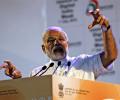
Prime Minister Narendra Modi, at the India Mobile Congress (IMC) 2026, articulated a vision for India's communications sector, emphasizing a global framework to combat cyber frauds and deepfakes. He called for India to become a hub for innovation and product development for the world. Industry leaders lauded his vision, highlighting India's robust digital infrastructure and its journey towards becoming a global technology leader, with a focus on trust, security, and responsible innovation.
The White House has released a framework for artificial intelligence, focusing on empowering parents to manage their children's digital environment and advocating for federal leadership to promote innovation and address policy challenges.

AI4Bharat at IIT Madras and Josh Talks AI have launched 'Voice of India', a multimodal AI evaluation platform designed to assess AI systems against Indian conditions, languages, accents, and dialects. This platform aims to provide scientifically rigorous, India-specific evaluations, covering areas like Voice AI, large language models, document processing, safety, cultural appropriateness, and Indian legal reasoning, to build trust and enable informed deployment decisions.

'Applying AI to change the lives of Indians and at population scale -- just like we did with DPI [digital public infrastructure] -- is really where it's going to go.'
The Paralympic Committee of India (PCI) has sent an athlete back from the Asian Para Games in Japan due to alleged misconduct. The athlete faces severe disciplinary action, including a potential lifetime ban, after the Games conclude. The PCI reiterated its zero-tolerance policy towards misconduct and emphasised its commitment to discipline and integrity.

India is strategically positioned to develop a robust domestic semiconductor ecosystem, driven by increasing electronics consumption, strong government support through incentives, and a global shift in supply chains. Boston Consulting Group Managing Director Ankush Wadhera highlights India's potential as a safe haven for investments, with the AI boom further fuelling demand for advanced chips. The nation aims to expand its capabilities across the entire semiconductor value chain, attracting significant global and domestic investments.

'India needs to create eight-nine million jobs annually to absorb the growth in the working-age population.' 'Failure to create productive jobs could squander the demographic advantage that we enjoy right now.'

Air Chief Marshal Ashutosh Dixit, India's new Chief of Air Staff, has outlined his top priorities, focusing on restoring the IAF's fighter squadron strength, accelerating indigenous programmes like Tejas and AMCA, and enhancing tri-services synergy. His vision, encapsulated by the acronym VAYU (Vigilance, Aatmanirbharta, Yukti, Unity), emphasises self-reliance in defence, tactical innovation, and integrated operations with the Army and Navy, alongside a commitment to air warrior welfare and national security.

The Government of Karnataka has called for enhanced collaboration with the BFSI and FinTech sectors to bolster its technology ecosystem and accelerate the adoption of innovative solutions. This initiative, discussed at an Industry Meet, aims to foster partnerships between government, industry, and academia, particularly through programmes like 'Government First', in preparation for the Bengaluru Tech Summit 2026.

National Commission for Women chairperson Vijaya Rahatkar urged protection officers to prioritise "first response" in domestic violence cases, emphasising sensitive handling and immediate intervention to prevent tragedies. She highlighted that the success of protection officers lies in timely protection for women, not just file processing. Rahatkar stressed the importance of the Protection of Women from Domestic Violence Act, 2005, and called for a comprehensive "One Woman, One Support System" approach involving various services, continuous training, and prevention through awareness and empowerment.

The Jammu Municipal Corporation has launched an integrated system combining AI-based road monitoring with cold emulsion pothole patching machines. This initiative aims to ensure timely and scientific repair of damaged roads across the city, leveraging modern technology to identify and fix defects efficiently, especially before the monsoon season. The AI system also detects other civic issues, promoting smart urban governance.

The Delhi government is set to introduce a comprehensive drone policy aimed at creating over 1,000 jobs and regulating drone operations. The policy will focus on establishing research clusters, flight testing facilities, and providing subsidies, while also addressing drone usage for government purposes like traffic management and surveillance, considering the city's extensive 'no drone zones'.

'A lot of people feel there is pressure on the AAIB not to go against Boeing or GE -- both enormous American companies.' 'If the AAIB implicates Boeing or GE, it will impact their sales.' 'If their sales are impacted, jobs are lost in the United States. No government would willingly do that.'

The Punjab Cabinet has approved a series of measures aimed at enhancing public safety through forensic science upgrades and boosting rural incomes with a new farm stay policy.
The Karnataka government has formed a committee on responsible AI to develop a framework for the safe, ethical, and transparent adoption of AI across government systems and public services.

The Supreme Court is set to hear a petition seeking mandatory and uniform labelling of ethanol percentage at petrol pumps and a public database on vehicle compatibility with ethanol-blended fuel. The plea also calls for an expert committee to assess the impact of E20 fuel on vehicles, environment, and food security, and a consumer disclosure protocol.

Union Health Secretary Punya Salila Srivastava highlighted the strong health cooperation within BRICS, emphasising the critical role of digital health and artificial intelligence in ensuring continuity of care. Speaking at the 16th BRICS Health Ministers' meeting, she noted shared challenges among member nations and showcased India's advancements in digital health infrastructure and AI strategy.

Kerala Infrastructure and Technology for Education (KITE) has published the 'Cyber Safety Protocol 2026' to ensure a secure digital learning environment and robust cyber defences for students in Kerala's public school system.

The Indian government has confirmed there will be no rollback of the 0.4 per cent Merchant Discount Rate (MDR) charges on Unified Payments Interface (UPI) transactions exceeding Rs 2,000, effective from October 15. Despite opposition, officials state the decision aims to make the UPI ecosystem self-sustainable and secure, with charges applying only to merchant payments, not person-to-person transactions.

An Indian AI Research Organisation official says India has adopted a balanced and pragmatic approach to AI regulation, avoiding the extremes of the US and EU models.

The pilots testing positive have been removed from duty, with their samples sent for confirmatory testing.
Artificial intelligence major Anthropic has reinstated access to its Fable 5 and Mythos 5 AI models after the US government lifted export controls imposed due to national security concerns over a "jailbreak" vulnerability. The company has implemented new safeguards and is collaborating with major tech firms to develop a framework for addressing AI model vulnerabilities. India, a significant market for Anthropic, will see Fable 5 available globally, while Mythos 5 access expands under Project Glasswing.

The Delhi government is developing a drone policy focused on creating research clusters, establishing testing facilities, enabling drone use in traffic management, and providing subsidies to support the drone ecosystem.

Prime Minister Narendra Modi, addressing the BRICS summit, called for a fundamental shift in global governance, advocating for the replacement of the current 'pyramid of privilege' with a 'platform of partnership' where the Global South becomes a 'rule shaper' rather than a 'rule follower'.

The Indian government has introduced a 0.4% fee on UPI transactions above Rs 2,000 for merchants, effective October 15, sparking strong opposition from political parties and traders. Despite accusations of foreign influence and demands for a rollback, the finance ministry and top functionaries have stated there will be no reversal, citing the need for a self-sustaining digital payments ecosystem.
